Build a Commercial Interior Around How People Use It
Commercial flooring has to balance several demands at once. It needs to suit the business's appearance, accommodate regular foot traffic, support a practical cleaning routine, and fit the budget for both installation and future maintenance. In offices, reception areas, meeting rooms, and other interior environments, the floor also contributes to the way a space feels to employees, customers, and visitors.
Carpet tile is one option for businesses that want the look and comfort of carpet in a modular format. Its individual tiles can be arranged in different patterns, and certain products may allow localized replacement if a section becomes stained or damaged. These characteristics can make carpet tile worth evaluating when planning a new commercial space or refreshing an existing interior.
For businesses in Tampa, selecting flooring also means considering how the building is used throughout the year, how indoor environmental conditions are maintained, and how easily the floor can be cared for between routine maintenance visits.
Match the Flooring to the Type of Business
The most suitable carpet tile depends on the environment in which it will be installed. A quiet office with limited visitor traffic has different needs from a reception area where people enter throughout the day.
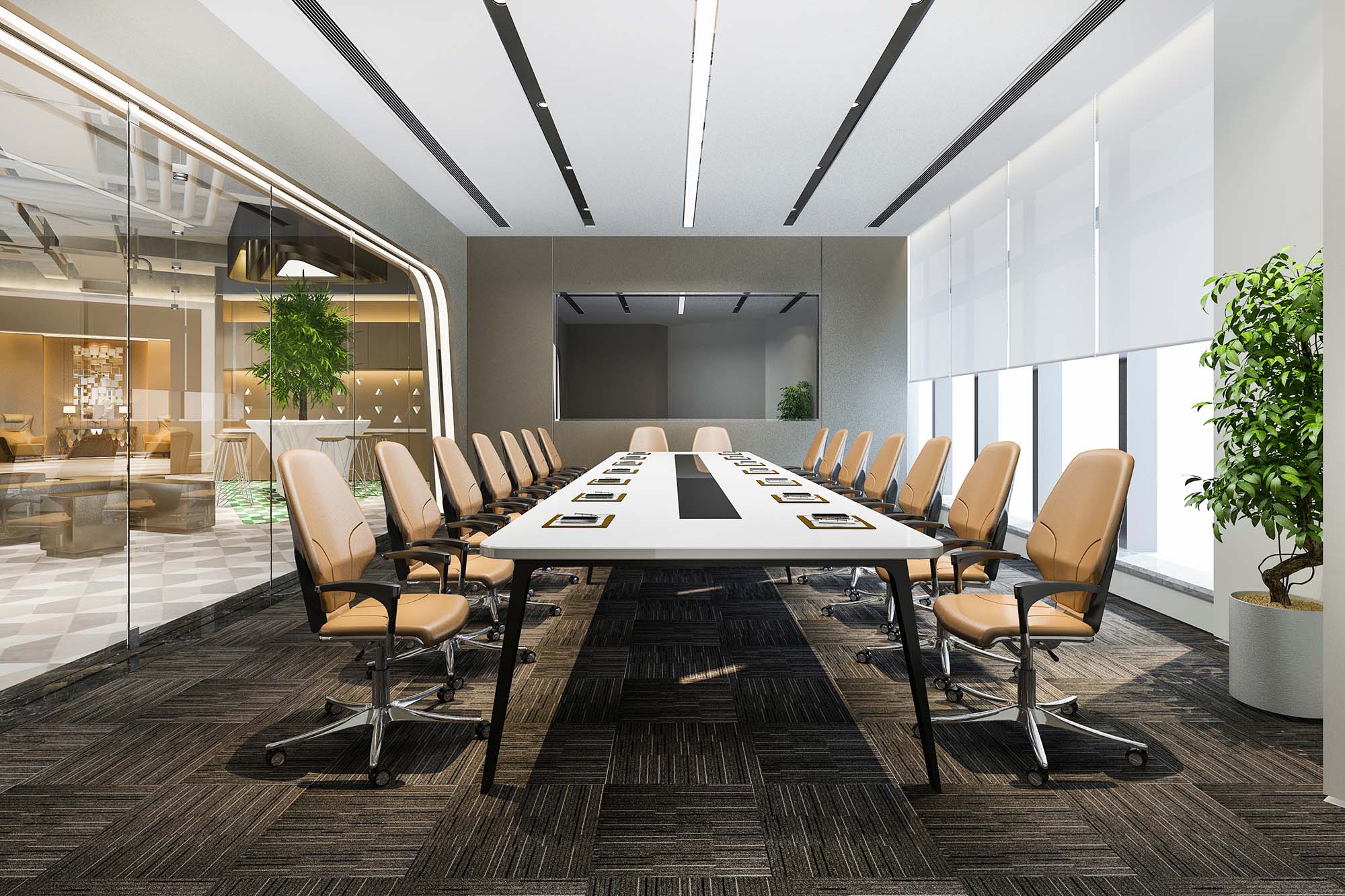
In a private office, the design may prioritize comfort and a professional appearance. A conference room may benefit from a surface that contributes to a quieter atmosphere. In a shared workspace, the floor may need to accommodate moving chairs, changing furniture arrangements, and regular foot traffic.
Before selecting a product, consider how many people use the area, whether food or drinks are present, what type of furniture is used, and how often the space is cleaned. These details help determine which product specifications deserve the most attention.
A flooring decision should begin with the business's actual operating needs, not simply with a color or pattern that looks attractive in a sample.
Create Visual Interest Without Making the Space Feel Busy
Commercial flooring does not have to be a uniform field of gray or beige. Carpet tile is available in a range of colors, textures, and modular formats that can create a distinctive interior while maintaining a professional appearance.
Warm neutrals can make an office feel more welcoming, while deeper colors may establish a more formal atmosphere. Subtle linear patterns can help define circulation routes, and variations in tone may add depth without overwhelming the room.
The arrangement of the tiles can also influence the final design. Depending on the product, tiles may be installed in a consistent direction, alternating directions, or other manufacturer-approved layouts. Different orientations can create a more dynamic appearance, but the selected pattern should be planned before installation.
For businesses with branded interiors, flooring can complement wall colors, furniture, signage, and other visual elements. It does not need to reproduce a company logo or use dramatic colors to support the brand. A coordinated palette may create a more polished and lasting result.
Use Carpet Tile to Define Different Work Zones
Modern commercial spaces often serve multiple purposes. An office may include individual workstations, collaborative areas, meeting rooms, and quiet spaces within the same open layout.
Flooring can help distinguish these zones without introducing walls or partitions. A change in carpet tile color or orientation may mark a meeting area, create a visual boundary around a collaboration space, or guide visitors toward reception.
The changes should remain subtle enough to support the overall design. Too many contrasting patterns can make a space feel fragmented, while a carefully chosen combination can give the layout a sense of organization.
If the design includes multiple tile styles, confirm that the products are compatible in thickness, installation requirements, and maintenance needs. A visually coordinated floor also needs to function as a practical, continuous installation.
Consider Acoustics in Offices and Meeting Rooms
Noise can affect comfort and productivity in commercial interiors. Conversations, footsteps, moving chairs, and sound reflecting from hard surfaces may become distracting in open offices or meeting rooms.
Carpet tile can absorb some sound within a space and may reduce the noise associated with footsteps compared with many hard-surface floors. The extent of the benefit depends on the tile construction, backing, installation system, and other room materials.
It is important to distinguish sound absorption from soundproofing. Carpet tile alone will not prevent sound from traveling through walls, ceilings, or floors. If acoustic privacy is essential, the flooring should be considered alongside partitions, doors, ceiling treatments, and other building elements.
Ask about the product's acoustic performance when comparing options for meeting rooms, shared workspaces, or areas where a quieter atmosphere is important.
Evaluate Durability for the Actual Traffic Level
A commercial floor can experience concentrated wear around entrances, corridors, workstations, and furniture. Selecting carpet tile requires understanding the product's intended application and the level of traffic it is designed to accommodate.
Review the manufacturer's guidance on commercial use, wear performance, cleaning, and maintenance. Consider whether the space experiences rolling chair movement, frequent furniture rearrangement, or regular delivery and service activity.
A product suitable for a lightly used private office may not be the best fit for a busy shared environment. Similarly, a dark color does not automatically make a carpet tile more durable, and a dense-looking surface should not be treated as proof of performance.
Ask about the characteristics that matter for the intended space. Matching the product to the operating environment can help avoid choosing a floor based primarily on appearance.
Understand the Potential Maintenance Benefits of a Modular Format
One practical feature of carpet tile is that the floor is divided into individual pieces. If a particular tile becomes stained or damaged, a replacement may be possible without replacing the entire carpeted area.
This can be useful in commercial spaces where spills or concentrated wear occur in specific locations. A business may be able to address a localized problem while leaving surrounding tiles in place, depending on the installation method and product condition.
However, the process is not identical for every carpet tile system. Adhesive type, backing, the condition of adjacent tiles, and the availability of matching replacements all influence whether a repair is practical.
Businesses should ask about the recommended repair process before installation. Keeping spare tiles from the original order may be useful, especially for spaces where maintaining a consistent appearance is important.
Plan Cleaning Around the Business Schedule
Commercial flooring maintenance should be designed around the way the building operates. An office that is occupied throughout the week may need a different cleaning schedule from a business that closes on certain days.
Regular vacuuming helps remove loose dirt and debris. Entry areas may require more frequent attention because soil can be tracked in from outside. Spills should be handled promptly using cleaning products and methods approved for the carpet tile.
Before choosing a product, discuss its recommended maintenance procedures and whether specialized cleaning may be needed periodically. Consider who will perform the work, what equipment is available, and how much disruption can be tolerated.
Carpet tile does not eliminate maintenance, but a clear plan can make care more predictable. A suitable color and pattern may also help the floor maintain a professional appearance between cleaning visits.
Account for Indoor Conditions in Tampa
Tampa's humid climate makes indoor moisture management an important part of planning many building projects. Carpet tile must be installed under the environmental and substrate conditions specified by the manufacturer.
Before installation, the subfloor should be checked for moisture, cleanliness, and suitability. Existing water intrusion, leaks, or other moisture concerns should be resolved before the new flooring is installed. Using an unsuitable adhesive or installing over an improperly prepared surface can lead to performance problems.
Indoor air conditioning and ventilation help maintain the building environment, but they do not remove the need for proper subfloor assessment and installation. The selected product should be appropriate for the intended space and its expected conditions.
If the area has a history of moisture issues, discuss it before choosing the flooring. A product that works well in a dry office may not be suitable for every ground-level or moisture-prone space.
Consider Carpet Tile Alongside Hard-Surface Flooring
Not every commercial area needs the same flooring. Carpet tile may be appropriate in offices, meeting rooms, or other spaces where comfort and sound absorption are priorities, while tile may be more suitable for certain areas that need a hard surface.
For example, a business may consider carpet tile in a meeting room and tile in a reception area or another location where the cleaning requirements differ. The suitability of each material depends on the specific product, expected traffic, moisture exposure, and installation conditions.
Transitions between materials deserve attention. Floor heights, doorway clearances, edge treatments, and visual coordination can affect the result. The materials should work together as part of one plan rather than being selected independently.
Mike's Flooring offers both
carpet tile and
tile flooring options to consider when comparing materials for different areas of a commercial interior.
Include Installation and Replacement in the Budget
The total cost of a commercial flooring project may include more than the price of the carpet tile. Existing floor removal, subfloor preparation, adhesives, installation, transitions, furniture handling, and disposal can all affect the budget.
It is also useful to consider how the floor may need to be maintained over time. If the business expects to make furniture changes or experience concentrated wear, ask how repairs would be handled and whether replacement tiles can be sourced later.
Scheduling is another important consideration. Installation may require temporarily clearing the space or adjusting normal operations. Establishing the scope and timing early can help reduce disruption.
A well-planned project accounts for the practical demands of installation as well as the appearance of the finished floor.
Choose Carpet Tile with Long-Term Use in Mind
Carpet tile can offer commercial interiors a combination of design flexibility, some acoustic benefits, and a modular format that may support localized replacement. Those advantages depend on selecting a product suited to the environment and installing it according to the manufacturer's requirements.
Businesses should compare construction, maintenance, traffic suitability, and installation conditions before making a final decision. The right flooring should complement the space while supporting the way the organization operates every day.
To explore carpet tile options, visit the
carpet tile page at Mike's Flooring. For help discussing a commercial flooring project, use the
contact page to get started.